Showing posts with label diy. Show all posts

Homemade Scrabble/Boggle Letter Dice Game for Writing, Spelling lesson plans

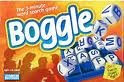
Here's a fun, easy DIY game to make and play with children and tweens to keep reading, writing and spelling skills fresh. I love the word games Boggle and Scrabble in which players make words from random letters. Both Scrabble and Boggle are superb games for spelling and reading practice. Here's a game that combines the scoring of Scrabble with the letter mix-up of Boggle. And best of all, it's easy to make, fun to play, has endless variations and is adaptable. This game can be played in the car, at the store, on a place, while waiting in line; anywhere you go it goes. I call it 'Scraggle'. Here's how to make your own Scraggle game.

You will need

12 dice: Recycle die from old games like Kismet or Yahtzee.
Dice can be purchased at almost any store for under $2).

Permanent markers

Blank stickers (round or square white stickers are best)

Note pad

small pencils

watch or timer

small box


To make Scraggle: (Scrabble plus Boggle)

Affix a sticker to each of the six sides of the die.

Label each die side with a different letter. With 12 dice times six sides you will have room for 72 letters. Since some letters are more popular, label dice this way. It makes no difference where on the dice you put which letters, Just be sure to get this many letters in.

  -four times each, letters: A, E, I, O, U, R, S, T, L, N

  -three times each letters: B, C, D, F, G, H, M, P

  -one time each, letters: J, K, Q, V, W, X, Y, Z

  -dictionary to check spelling


To play Scraggle:


Distribute pencils and pads. Players take turns shaking box with letter dice, to rearrange.

Player open box and make sure all dice are flat and showing letters.

Time players for three to five minutes, to see how many words they can make with letters showing.


Scoring is as follows;


  -3 letter words = 5 points

  -4 letter words = 10 points

  -5 letter words = 20 points

  -6 letter words = 50 points

  -7 letter words = 100 points

  -8 letter words = 200 points

Players should check each others words for accuracy.


Earth Day recycled trash crafts: Cross-curricular Cellphone Cases

Looking for jazzy recycled trash craft projects for Earth Day? How about homemade cellphone cases? You can pick up cheap cases for iPhone or Android and decorate them. Empty the recycle bin and let students create mosaic or patterned cellphone cases from recycled trash. Make cross-curricular crafts. 

Math crafts: Make tesseracts, mosaics, 3D images, spirals (to teach Fibonacci numbers) and other mathematical patterns. 

History and social studies crafts: make cellphone cases with timelines, statues of famous people, Egyptian scarabs or jeweled reliquaries. 

Geography crafts: Draw maps on cellphone cases. Create your own treasure map! 

Literature crafts for lesson plans: Make a cellphone case that resembles a book, or index from card catalog. Choose a favorite book and make cellphone cases on that theme. This could be an extension for hands-on book reports. 

These Earth Day recycle bin trash crafts are perfect for interactive art lesson plans too. 


Back to School DIY Science Nature Detective Kit

Back to School Science Kickoff Activities: DIY Nature Detective Kit Welcome kids back to school with science exploration kick off activities. Make easy inexpensive individual nature detective kits. 

Looking for summer camp kids' activities? Here's a nature science lesson plan. Make nature detective kits to explore wildlife science concepts. Use this activity to welcome kids back to school. Kids will love playing nature CSI! Homeschooling parents will love this inexpensive, hands-on science lesson.

You will need one of each of these items per student:

--large gallon size zipper bag or cheap carry-all bag to store supplies

--plastic magnifying glass (available in bulk at Great Party, Party America or Oriental Trading)

--cheap one-subject notebook

--pocket folder ($.05 -$.15 each from Walmart, Staples, Target)

--plastic disposable gloves (choose latex free; give each student one pair)

--tweezers or cotton swabs (both would be useful, but use cotton swabs to save money)

--3 or 4 specimen bags (snack size Zip-Loc)

--3-4 larger specimen bags (sandwich size Zip-loc)

--sheet of label stickers

--pen and pencil

-- roll of invisible Scotch tape

--several pieces of yarn or string

--box of crayons ($.25 at back-to-school sales)

--measuring tape (here's a free printable measuring tape)

How to Use Nature Detective Kits:

Make kit assembly part of the lesson. Set out supplies in stations and give students gallon zipper bag and supplies list. This provides experience in counting, sorting and organizing.

Using stickers, kids label notebook: Investigator (name)____________ or Detective (name)____________. Label bags: Exhibit A, B, C or Evidence. As evidence is collected, data and date should be added. For example: 'beetle exoskeleton 9-3-2015.

Go on nature investigation hunts around your neighborhood, school playground or camp. Assign students different items to investigate, native to your area. Students should not keep living specimens, but they might bring a bug box to temporarily house and examine a living critter. Look for evidence of living creatures: bug carcasses, exoskeletons, fallen leaves, feathers, owl pellets, seed pods, rocks, fallen nest, bits of animal fur, bark samples, plants, flowers and rocks.

Have students draw living creatures, homes and habitats: spider's web, bird's nest, wasp's nest, rabbit hole, ant hill, scat (animal droppings). Students should record when and where they observed it. Students shouldn't touch but may observe scat(animal droppings) or dead animal remains.

In class, have children discuss and hypothesize on findings at their level of reasoning. Students might create a natural history museum displaying what they have found. Students can act as young docent guides, explaining discoveries to visitors. This makes a superb activity for parent-teacher conferences, which come early in the year before teachers have had time to collect much student work. It's ideal for summer camp, too. 

DIY Preschool Classroom Learning Centers: Sand and Water Table Ideas

The sand table, also called the water table or sand and water table, is a staple in preschool learning centers,  early childhood special education and kindergarten classrooms. The sand table is a hollowed out table that can be filled with sand and/ or water for interactive play. Here are diy water table ideas for preschool, day care, homeschool, Montessori, kindergarten and any exploratory classroom environment. The water table is an important part learning centers based classrooms. The sand table provides tactile stimulation, interactive hands-on exploration and play therapy for special education and early childhood development. It fosters perceptual and cognitive development in special education students. It helps with special education occupational therapy.

You can purchase a sand table or make homemade one using one of these alternatives: dish pan, recycled plastic laundry soap bucket, shallow plastic covered storage bin, inflatable child's swimming pool, small hard plastic swimming pool or covered Little Tikes Turtle sandbox. I have used all of these as a DIY water table in my teaching career. The nice thing about using a smaller water table is that it's portable. If you choose a covered container for a sand table you can store in when not in use. The Little Tikes Turtle sandbox makes a particularly nice sand table as you can use it indoors and outdoors, as a pool or sandbox.

In the summer weather, take the Turtle sandbox outside for outdoor learning centers. In the cold, wet winter months, bring the sandbox inside and set up in your special education and preschool classroom learning centers. Cover the floor with an old recycled plastic shower curtain or tablecloth for easy clean up. Set a little broom and dust pan nearby so that children can sweep up sand and replace in sand table. This is good housekeeping practice for the house or practical life learning centers.

DIY Scrabble/ Boggle Letter Dice for Word Games

To make your own Scrabble or Boggle dice, you'll need 12 dice: Recycle die from old games with lost pieces. Look for old dice games like Kismet or Yahtzee at garage sales. Ask a handy man to cut small dice cubes from scrap wood. Dice can be purchased at almost any store for under $2).
Permanent markers
Blank stickers (round or square white stickers are best)
Note pad
small pencils
watch or timer
small box

To make Scrabble/Boggle dice
Affix a sticker to each of the six sides of the die.
Label each die side with a different letter. With 12 dice times six sides you will have room for 72 letters. Since some letters are more popular, label dice this way. It makes no difference where on the dice you put which letters, Just be sure to get this many letters in.
  -four times each, letters: A, E, I, O, U, R, S, T, L, N
  -three times each letters: B, C, D, F, G, H, M, P
  -one time each, letters: J, K, Q, V, W, X, Y, Z
  -dictionary to check spelling

Pin with Me!

Follow Me on Pinterest