Showing posts with label ELA. Show all posts

Reading response journal activities for book report alternatives, ELA lesson plans


March is National 
Reading Month, starting with the NEA's "Read Across America." Looking for ideas to inspire a life-long love of books? Here are reading response activities, interactive ELA (English language arts) lessons, book-based crafts and literature response lessons. Book activities are hands-on, multi-sensory, cross-curricular Montessori-style. Use for interactive Readers Workshop, special education students, reluctant readers, divergent learners and summer reading enrichment.

Reading response journal. Have kids create personalized reading logs, respond to literature and complete book-based activities. Check off ELA activities as completed. Check out my other post for a reading response journal rubric. 

Homemade books. Cut book covers from cereal box. Cover with scrap wrapping paper or wallpaper. Cover with magazine picture collage. Decoupage by painting pictures with watered-down school glue, front and back. Cut lined paper pages (for text) and blank paper (for illustrations). Or use scrap paper and draw in text lines. These make great hands on reading response activities for readers workshop and writers workshop. They are the perfect book report alternative for English language arts lesson plans. 

Book-based promotional materials. Have kids play marketer for their favorite book or author. Make posters, book covers advertising literature. Create 3-D sculptures, models or dioramas based on books. Make book-based merchandise: toys, snacks, food, games. In homeschooling, my 6th grade son designed a "Hobbit Holes" cereal box designed on his favorite J.R.R. Tolkien novel.

Book diorama book report alternative. Create scenes from books using recycled products. Arrange scene in shoe box. Use small dolls (Lego, Fisher-Price, Little Tikes, Polly Pockets) as characters.

Story-reading audio/video presentations. Using cellphones, have students create videos of themselves reading books. Encourage them to create a literature podcasts or vlogs. Upload videos to Youtube or Tik Tok. Reading aloud boosts confidence in ELA subject matter. 

Story-telling. Students read aloud to younger students. Students act out children's books and present to younger or special needs classes. In high school, our oldest daughter acted out a Shel Silverstein's poem "Noise Day" for special education kids. They loved when she skateboarded across the stage! Talk about an interactive reading response activity! 

Book-music connections. Create music playlists based on books. Select metaphorical songs. Kids will love choosing modern songs to represent story themes. Our family saw a production of "Macbeth." The play was set to Lady Gaga's "Bad Romance," "The Decemberists "This is Why We Fight" and "Ain't No Rest for the Wicked" by Cage the Elephant. It really resonated with students and helped them understand and relate to Shakespeare. Plays and music help connect English language art activities to life. 

Help students brainstorm on creative book report alternatives and reading response activites. 

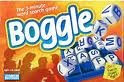
DIY Scrabble/ Boggle Letter Dice for Word Games

To make your own Scrabble or Boggle dice, you'll need 12 dice: Recycle die from old games with lost pieces. Look for old dice games like Kismet or Yahtzee at garage sales. Ask a handy man to cut small dice cubes from scrap wood. Dice can be purchased at almost any store for under $2).
Permanent markers
Blank stickers (round or square white stickers are best)
Note pad
small pencils
watch or timer
small box

To make Scrabble/Boggle dice
Affix a sticker to each of the six sides of the die.
Label each die side with a different letter. With 12 dice times six sides you will have room for 72 letters. Since some letters are more popular, label dice this way. It makes no difference where on the dice you put which letters, Just be sure to get this many letters in.
  -four times each, letters: A, E, I, O, U, R, S, T, L, N
  -three times each letters: B, C, D, F, G, H, M, P
  -one time each, letters: J, K, Q, V, W, X, Y, Z
  -dictionary to check spelling

Make Classroom Reading Games Using Cartoons and Comic Strips


Years ago, I made a file folder game that has traveled with me to elementary, middle school, special education, adult education and homeschool classrooms. This language arts- reading game uses cartoons, comic strips and graphic novels. I call this game Cartoon Cut-Ups. 

  Each student is given an envelope containing the individual frames of one cartoon strip. I use the colored comics from the Sunday cartoons in the newspaper. Each comic strip have six to eight frames. The object of the game is to reassemble the mixed up cartoon frames back in their original order so that the cartoon makes sense. Graphic novels work well also, but generally have more frames. Assembling a graphic novel cartoon will be more challenging.

  Cartoon Cut-Ups challenges a student skills in looking for details, sequencing, ordering and classifying. Cartoon Cut-Ups helps students explore and understand, plot, dialog, time progression, if-then relationships, contextual clues, drawing conclusions, making inferences and predicting character behavior. Higher order thinking skills practiced include analysis, application and synthesis.

  When choosing a comic strip to use for this reading game, look for cartoon that show plot progression at various levels of comprehension. Look for comic strips in which the plot progression can be traced from frame to frame. Many cartoons rely not only on dialog to carry the plot, but picture or context clues. Characters' facial expressions help identify the plot, also.
  
  To make Cartoon Cut-Ups, you will need:
  -one blank manila file folder
  -assorted comic strips, cartoons and graphic novels
  -scissors
  -small envelopes
  -small round or square stickers
  -gallon sized zipper bag
  -stapler
  -laminating materials or contact paper
  -dark marker

  Procedure:
  -Rule off 12 large squares on the inside of file folder, and outline them in dark marker. Number each square inside 1-12.
  -Laminate the file and the uncut comic strip.
  -Affix a sticker to the back of each cartoon frame and label the stickers in order. This way, students       can self-check    their work, correct any errors and have immediate feedback.
  -Cut comic strips apart along the frame lines.
  -Place individual comic strip pieces in unsealed envelope and label with name and difficulty level.
  -Gather all cartoon envelopes into zippered bag. Leaving bag open staple one side to inside of file folder, below the       zipper area. Seal bag.
  -Label outside of folder with game name. Write directions on the back.


Free Printable Spanish ESL Lesson Plans

If you are a teacher with Spanish speaking children or adults, or if you teach Spanish, another foreign language, or English as a Second Language, here are free printable Spanish-English translation activities. True to my special education training, these materials aren't simple workbook pages. You can find those in any textbook series. These are free printable Spanish lessons with attitude! Print ESL worksheets, games, flashcards, matching games, puzzles, crossword, word games, projects--in short interactive activities! Here's a neat concept website in English as a Second Language printables--a user-supported site where teachers have to upload and share their ESL worksheets in order to download and print others

Free Printable File Folder Games


 Hello my Omschooligans! Games and craft projects make excellent lesson plans. Making learning games as craft projects is a perfect way to extend activities. And one of the simplest and easiest games to make are file folder games. Here are lesson plans to teach reading with file folder games. Students can learn just about any subject using file folder games to reinforce content and practice skills. Here are free printable file folders games online. Besides reading, teach math, reading, spelling, grammar, phonics, science, social studies and more. Print games for all ages and ability levels: preschool, kindergarten, elementary, special needs, middle school. Use for homeschool, too.

File Folder Fun has over 100 free printable file folder games in content areas across the curriculum. Search by age, grade level, theme and subject. File folder themes include animals, foods, flowers, weather, ocean life, circus. Themes teach math, reading, science, social studies, phonics, spelling, math,


ELA (English Language Arts) history, music and other preschool and elementary school subjects. Click the games you want. The click "download." And voila, a screen appears with game background, pieces, cards, all materials you need, free.

Play to Learn Preschool has a free downloadable pack of 10 free printable filefolder games for math, English, reading, writing, spelling, science, social studies and more. Games can be used with varied ages. Click the game you want. The print, cut out and and assemble. Or better still, print in black and white. Have students color, cut and paste and assemble. You get two activities--craft, lesson plan and game--all in one!

Cindy's Autistic Support has free printable math file folder games. Use to teach counting, addition, subtraction, multiplication and division file folder games. You can make individual games for each math fact (times table) family.

Stitching Hearts WW offers an assortment of free printable file folder games to download, print, color and assemble. 

To make file folder games:

Print game board and glue to inside of file folder. Write instructions on outside. Laminate or cover with contact paper. Make a spinner by drawing a circle. Divide like a pie. Label segments with game advancement options. Place paperclip on paper fastener (brad). Poke fastener through center of circle. Spin paper clip.

Store game cards or pieces in zippered plastic bag or envelope stapled to folder. File folder games store upright in filing cabinet or drawer. Get extra craft project mileage from free printable file folder games by assigning students make them. They can practice cutting, pasting, assembling and following directions. 

Free Printable Cut and Color Booklets

Educator Jonathon Holt says children learn best when they are actively involved. So here are free printable mini books, miniature coloring books and preschool activity booklets for children to color. Subjects in mini books include letters, words, seasons, animals, science, Bible, holidays and lots more. These coloring books make excellent preschool lesson plans for classroom and homeschool lessons for ages 4-7 years old. These free printable activity booklets are especially good for special needs children. To print coloring books, visit DLTK-Teach. This page lists all the themes for free printable mini books and activity booklets. 

Free Printable City of Ember Lesson Activities


The "City of Ember" book series, by Jeanne DuPrau, (2003) is a science-fiction post-apocalyptic fantasy series loved by students and educators alike. Many elementary, intermediate and middle schools are incorporating City of Ember books into their classroom curriculum. With the release of a movie version students can read and study the books and follow up with the film version for comparison. Here are free printable City of Ember book activities, movie study guides and lesson plans.

The series chronologically is City of Ember, People of Sparks, Prophet of Yonwood and Diamond of Darkhold. Not all have been made into film so there are movie study guides only for City of Ember. But there are book activities for all books. Here are free printable lesson plans for teaching the City of Ember book series. Lesson Planet is a pay site with some free book activities to print. Here arefree printable City of Ember lesson plans. Scholastic also charges for many of their printables. But here is a City of Ember book discussion guide to print free. 

This free printable lesson plans kit includes story maps, worksheets, book activities, character webs, comprehension questions, movie study guides, vocabulary, grammar, symbolism, cause and effect, analysis and application questions, synthesis and evaluation questions, book activities, games, reading response rubrics, charts, quizzes and more. The City of Ember books are a dystopian series that tells of a people that has suffered depletion. They've gone underground, to re-emerge at a given time in the future. City of Ember is Orwellian science fiction, reminiscent of 1984, Ray Bradbury's Fahrenheit 451 and Aldous Huxley's Brave New World and The Hunger Games series by Suzanne Collins. Use book activities and movie study guides for units on science fiction.

Green Earth Lesson Plans: Dr. Seuss The Lorax


Dr. Seuss celebrates his birthday on March 2. We celebrate Seuss in March with National Reading Month and Read Across America. For good Seuss fun, why not read "Bartholomew and the Oobleck" and make oobleck What's Oobleck? It's Seuss for Goop-Slime-Silly Putty-Gak Splat-Flubber. Those are commercial names. But you can make your own. 

But watch out. Oobleck has a mind of its own as Bartholomew finds out (he's the lad who had hat trouble in Seuss's 500 Hats of Bartholomew Cubbins.") Here are oobleck recipes. Stretchy, noise putty Oobleck (fondly referred to by kids as "farting" putty.) Mix in zippered plastic bag, equal parts liquid laundry starch and white school glue. Liquid laundry starch is located with laundry supplies. A common brand is Sta-Flo. It's a light blue milky substance. Mix with fingers till glue is blended in and there is no tackiness. Kneading makes Oobleck rubbery and bouncy. Galactic glitter Oobleck. Give Oobleck a glam makeover. Add a little glitter to the noise putty recipe. This is the same recipe for Silly Putty or Flubber. Keep fresh in refrigerator stored in plastic bag. Glow in the Dark Oobleck. Make Halloween Oobleck by adding a little glow powder or luminescent fact paint to the Oobleck. Take it outdoors or shine a black light on it. Mystery oozing Oobleck: Blend small amounts of water in powdered cornstarch. The Oobleck moves back and forth between liquid and solid states of matter. It "melts" with warmth of your hands hardens as it cools. Touch and it melts. Like Bartholomew's oobleck it seems to have a life of its own. Mix directly on a table. Spills dry and vacuum up easily. Here are more science recipes and homemade art supplies made f

Free Printable Reading Response Journal Rubric


Looking for creative ways to teach reading or literature units? Use reading response journals. Here's a template to make student reading response journal. Use for English, ELA (English language arts), literature, reading and writing classes. Use for Readers Workshop (a popular interactive reading group method used in elementary and middle school). Here's the reading response journal format.

Give each student a single subject notebook (wireless notebooks work best). Use the same one for all lesson plans or start a new one for each unit or book genre study. In middle and high school, students should make separate response journals for longer books and more comprehensive literature studies. All written assignments are completed in this notebook (except a final project).

Create a blocked calendar chart, like a bingo card, with 5 columns and 5 rows of squares. Label columns with main components of ELA curriculum: reading, writing, speaking, listening and multisensory response. Label rows with higher order thinking skills (HOTS): Recall/Comprehension, Analysis (structure), Applications (text to text, text-to-life connections), Synthesis (text to new use), Evaluation (thoughts, feelings, opinions, rationale).

Write 25 literature response activities for a month or of assignments. List one assignment per box. Leave room to write in specifics. Photocopy (students complete similar activities for each book or genre studied). Attach to inside front cover of journal.

Tailor activities to state objectives, and student ability. Make it flexible enough for special needs accommodations and student learning styles, Give options. Let students choose 22 out of the 25 activities and do the last three for extra credit if desired. Students may complete assignments in any order. They can double up on slower days and skip assignments on busier days.
Each assignment should take 30 minutes to complete: two paragraphs of writing or 30 minutes of reading, speaking and listening. Assignments are completed in the notebook, labeled according by chosen activity and dated.

Initial completed activities in each box and note the points (in pen). Make notes or correction on the response page. Keep copies of each students chart for your records or keep digital copies. Each activity is worth 30 points: 18 points for content and quality, 7 for mechanics (spelling, punctuation and grammar), 3 for neatness/clarity, 1 for being on time (calculated at the end of the month) and 1 for proper labeling. (name, date, class, period),

Reading Response Activities from Bloom's Taxonomy


. Here are ways to help students engage with books. Use these for Readers Workshop and reading group response activities. Teach interactive ELA (English language arts) literature-based activities. Book activities are hands-on, multi-sensory, cross-curricular Montessori-style.

Book club. Use these DIY Summer Reading Camp program printables from Education.com. Kids organize the reading club, choose books, think up response activities and host events. Serve snacks.

Book party. When the reading group completes a book, have a party to celebrate! Serve snacks and foods mentioned in the book. Make crafts. Host a coffee shop in the classroom, like adult book clubs. Kids will love being very grown-up.

Group reading incentives. Get involved with Pizza Hut Book-It program (homeschoolers, you can participate, too). Have a pizza party after completing reading goals. Reward reading by giving books as prizes.

Fundraise while reading. Each completed book or hour of reading donates money to a chosen charity. This give-back is a great way to incent reading while teaching kids that they don't always need to get prizes. Reading is reward enough. Helping others while doing it is even better. Check out the One More Story program. It raises money for RIF Reading is Fundamental.

Readers theater, Students read stories in chorale format. Readers must use voice, inflection, projection and emphasis as if they were on stage, but there's no acting and they're seated.

Puppet show. Make book character puppets. Have kids retell story. Or let them write their own stories using homemade puppets. High school and middle school students can create a puppet show to put on for elementary students. They'll love re-reading favorite books from childhood.

Radio play. Invent a student radio station (WRDR, BOOK, READ). Using reader's theater techniques, dramatize story. Create sound effects. Add fake commercials related to book. A Moby Dick radio play might feature Whale-B-Gone" spray or Happy Hunter's Harpoons. Present on local or school radio station.

Book to film. Students fill roles as director, properties, scenery. Make character costumes. Create sets. Design props. Do stage make-up and special effects. Act out story. Film the production. Upload book-based films and skits to Youtube. Present to students.

Literature based music videos. Take the playlist selected and create a book-based music video. Select images from free online photo sharing sites. Draw images from the story. Or best of all, have students take their own photos and use these. Make into a slideshow using Windows Media Player. Create presentations with Microsoft Powerpoint.

Pin with Me!

Follow Me on Pinterest