Free Printable American History Lesson Plans: Battle of Yorktown

 The year is 1781. The colonial army of the United States has been at war with Great Britain for over six years. On April 19, 1775 'the shot heard round the world' began the bloody war for American independence. Yorktown ended the war. Here are free printable American history lessons on the Revolutionary War from Bunker
Hill, Lexington and Concord to the Battle of Yorktown. 

The Revolutionary War began when Paul Revere made his famous ride to warn American Continental Army of the American Revolution, of British "redcoat" troops arriving Lexington and Concord where the Revolutionary War commenced. Fighting continued at the Battle of Bunker Hill and the Battle of Quebec, led by American General Benedict Arnold. 

General George Washington led the Continental army of the American Revolution into battles at Fort Ticonderoga, Brandywine, Germantown, Saratoga and Camden and other New England sites. After terrible suffering over the winter at Valley Forge (click here for free printable American history lessons on Valley Forge) troops regrouped for a confrontation which came to be known as the Battle of Yorktown in Virginia.

The Battle of Yorktown (click here for free printable Battle of Yorktown lesson plans) lasted for
21 days from September 28 to October 19, 1781. General George Washington was helped by French
troops under General de Rochambeau. General Lord Cornwallis led the British troops. The British
soldiers hired German soldiers from Prussia to help them. These soldier were called Hessians and
both they and the British troops were highly trained in warfare and military tactics. Compared to the
Continental Army, the British "Lobsterbacks" and Hessians had more supplies, better weapons and
superior fighting skills.

But despite that, by 1781, things weren't going well for General Cornwallis and the British. His army
had suffered much. He took over the towns of Yorktown and Gloucester, but the help he was
supposed to receive from General Clinton never came until it was too late. French Admiral De Grasse
arrived in time to help General George Washington and together their armies attacked the British
from the York River. This river separated the two towns where Cornwallis had his troops. Without food
and ammunition from General Clinton, General Cornwallis was forced to surrender to General
George Washington on October 19, 1781. The Battle of Yorktown (click here for free printable
American history lesson plans, war maps and battle info) had ended the horrific Revolutionary War of
Independence in favor of the Continental Army.

Why did the superior forces of the British lose the Revolutionary War? They shouldn't have. The militia
of the American Revolution were glorified to Continental army, but they were just farmers, not
soldiers. They lacked guns, ammunition and training. Few soldiers in the American Revolution wore
uniforms. They wore regular clothing of homespun, animal skin leggings and fur trim. And that may
have saved their lives. Their uniforms may not have been as fancy, but they made great camouflage
in the wilderness battles. The British redcoats were easy to spot their bright uniforms.

British soldiers had also been trained on battlefields. British soldiers were used to life in a military
camp, not a rugged wilderness. The Continental army of the American Revolution knew all about
wilderness survival. They lived this every day! Colonials had learned hunting, trapping and fighting
skills from the native American Indians. They had learned to protect themselves. The Continental
army knew the land, the trails, how to stay hidden and how to navigate the area. In short, they fought
using guerrilla warfare. The Continental army was also fighting for their homeland. They had
families, loved ones, homesteads and farms to protect. They had risked more and so had more to
lose if they lost the war. British soldiers had homes to return to, so this war didn't mean as much to
them.

Free Printable American History Lesson Plans:French and Indian War

French and Indian War History Lesson Plans with Internet Links When you hear the name French and Indian War, it sounds like a war between the French and the Indians. It was really a war fought between the British and the French over land in North America. The French fought with the Indians against the British. 

August 15 is National Acadian Day, when French Canadians celebrate their heritage. A big part of French Canadian and American history, in fact all history is shaped by war. The French and Indian Wars were the first fought on North American soil. When you hear the term French and Indian War do you think of a war between French and Indians? The French and Indian War was really a war fought between the British and the French over land in North America. The French fought with the Indians against the British. The French and Indian War lasted from 1756 to 1763. It was also called the Seven Years War. Here are free printable American history lessons on the French and Indian War as well as French Canadian(called Acadian or Cajun) history lessons.

There were actually several battles fought between 1689 and 1763 that were called the French and Indian Wars. King William's War, Queen Anne's War and King George's War, or the inter-colonial wars were fought mostly in Canada (called Acadia in French). The French and Indian War  was the engagement of 1756-1763 which was fought in what was called America. What caused the French and Indian War? The New World, as North America was called, was a big area. Many countries like Spain, France, Holland and England controlled different parts of the land.

The English and Dutch had set up 13 colonies along the eastern seaboard (Atlantic sea coast). Here are free printable American history lessons on those 13 colonies. The original 13 colonies included Massachusetts, New Hampshire, Connecticut, Rhode Island, New York, New Jersey, Pennsylvania, Maryland, Delaware, Virginia, North Carolina, South Carolina, and Georgia. Spain controlled areas in the southern parts of North America and France controlled northern areas, including parts of Canada.

Each nation wanted to expand its empire (land it controlled). There are four ways to add more land to your empire--settle it, take it away from someone, buy it or go to war over it. The French and Indian War was fought along the British colonial frontiers (boundaries) from Virginia to Nova Scotia. The British and French Canadian fought over the "confluence" (coming together) of two important rivers, the Monongahela and Allegheny Rivers. This area is present day Pittsburg, Pennsylvania (click that link for free printable American history lessons on that region). A confluence where two bodies of water meet is a strategic area for trade. Rivers are important natural resources. Rivers are natural travel and trade routes. The country who controls the rivers controls the land.

In 1755, British troops led by General Braddock attacked Fort Duquesne (du-cane) in what would be called the Battle of the Monongahela in Acadia (Canada or New France). Braddock was killed. The British tried to invade Acadia and take over French territories in in 1755, 1756, and 1757. These attempts didn't succeed, mainly because British troops lacked proper organization and argued among themselves. The French Canadian also got along very well with the Native Canadian and American Indians and had their support. Instead of fighting, taking from and trying to control the Native American Indians, as the British did, the French befriended and cooperated with the Indians.

In 1755, the British took the French Canadian Fort Beausejour (click here for free printable French Canadian and American history lessons on Acadia or Cajun culture. This fort was in Acadia where the British had several major setbacks. Campaigns failed both at Louisbourg and the Siege of Fort William Henry. When William Pitt took control things turned around for the British. Between 1758 and 1760 British troops were able to gain ground in Acadia New France. The British took control of the French capital at Montreal in September, 1760.The French ceded control of Louisiana (New Acadia) to Spain, because Spain had lost Florida to the British. The French and Indian War ended France's control in North America and England was now the super power. William Pitt was granted the area which is now Pittsburg. 

American History Lesson Plans: 3 Branches of Government


Some American government lessons are easier to teach than others. The three branches of government, with its system of checks and balances can be tricky to explain. So here are free printable American government lessons with objects lessons to help kids understand. To understand checks and balances and three branches of government, imagine a table or stool resting on three equal legs. The three legs are the three branches. Each of the three legs has equal strength and equal responsibility for holding the table straight. Each of the three branches of government (three legs) has its own functions and all three have equal power--each checks and balances the other. Each checks the other two make sure neither becomes to powerful and balances the others in carrying its fair share. 

Use these free printable American government lesson plans to explain that the three branches of government are-- the Judicial, Legislative and the Executive Branches. Each of the three branches of government has its own functions and all three have equal power. The Executive Branch includes the President of the United States, Vice-President and the Presidential Cabinet, which has 15 departments. The Executive Branch carries out laws. The president can veto laws also and appoints judges. The head of each department is called a Secretary, except for the Department of Justice whose head is called the Attorney General. 

These are the Presidential Cabinet departments. Department of State- international relations with other countries, Treasury, Defense, Justice, Department of the Interior - wildlife and natural resources, Agriculture, Health and Human Services, Labor, Urban Development, Commerce, Transportation, Energy, Education, Veterans' Affairs, Homeland Security 

The Legislative Branch: This branch, also called Congress checks and balances by making laws. The Legislative Branch has two branches--the Senate has 100 senators, two from each state. The House of Representatives has 435 members. Each state gets a certain number of representatives depending upon state population. For a bill (suggested law) to become a law it must be approved by both houses. The Judicial Branch: This branch includes judges and the court system. 

The Judicial Branch checks and balances the others by interpreting or examining and explaining the laws and Constitution. The courts decide how laws should applied in different cases. The Supreme Court decides the most important cases

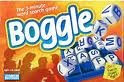
DIY Scrabble/ Boggle Letter Dice for Word Games

To make your own Scrabble or Boggle dice, you'll need 12 dice: Recycle die from old games with lost pieces. Look for old dice games like Kismet or Yahtzee at garage sales. Ask a handy man to cut small dice cubes from scrap wood. Dice can be purchased at almost any store for under $2).
Permanent markers
Blank stickers (round or square white stickers are best)
Note pad
small pencils
watch or timer
small box

To make Scrabble/Boggle dice
Affix a sticker to each of the six sides of the die.
Label each die side with a different letter. With 12 dice times six sides you will have room for 72 letters. Since some letters are more popular, label dice this way. It makes no difference where on the dice you put which letters, Just be sure to get this many letters in.
  -four times each, letters: A, E, I, O, U, R, S, T, L, N
  -three times each letters: B, C, D, F, G, H, M, P
  -one time each, letters: J, K, Q, V, W, X, Y, Z
  -dictionary to check spelling

Pin with Me!

Follow Me on Pinterest